The term “scale” is used in different contexts in wargaming, so we have decided to release a little handy-dandy reference and talk about our latest project.
Scale for measuring height
In a lot of popular wargames, scale is determined by height measurement (such as 28mm, 32mm etc.).
This is the eyeline height of a miniature – usually that of a standard infantry unit. A kind of measuring stick used to determine the size of other in-game objects and creatures. It puts Taiga’s miniatures in the 28mm scale bracket, because our Guardsmen, the average Joe’s of the catalog, are 28mm to the eye level.
You will sometimes hear that the game’s scale is, for example, between 28mm and 35mm if it has several factions with noticeable height differences. These differences are dictated by a number of things: lore, tabletop visibility, design choices or standards changing over the years.
However, for the sake of simplicity, we make a distinction between scale and height.
This character, Kathryn de Cisneros, is slightly taller than an average soldier to make her easier to identify as a leader.
The average soldier’s height is our point of reference that determines the scale (28mm).
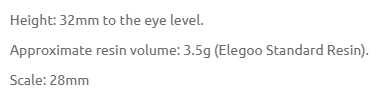
The actual eyeline height of the miniature is 32mm.
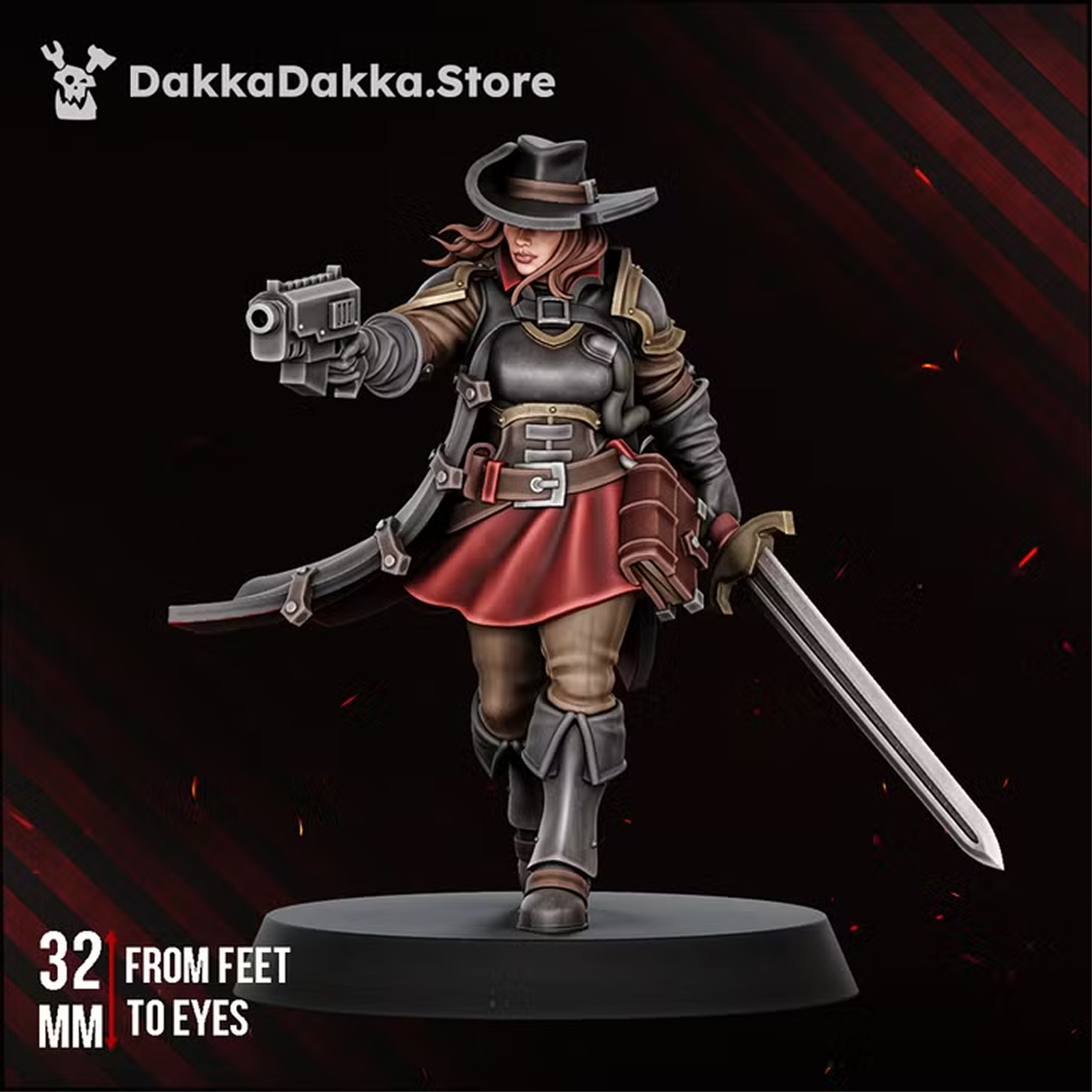
Why not from top to bottom? Mostly to keep the measurements consistent, no matter the horns, hats, helmets and hairstyles.
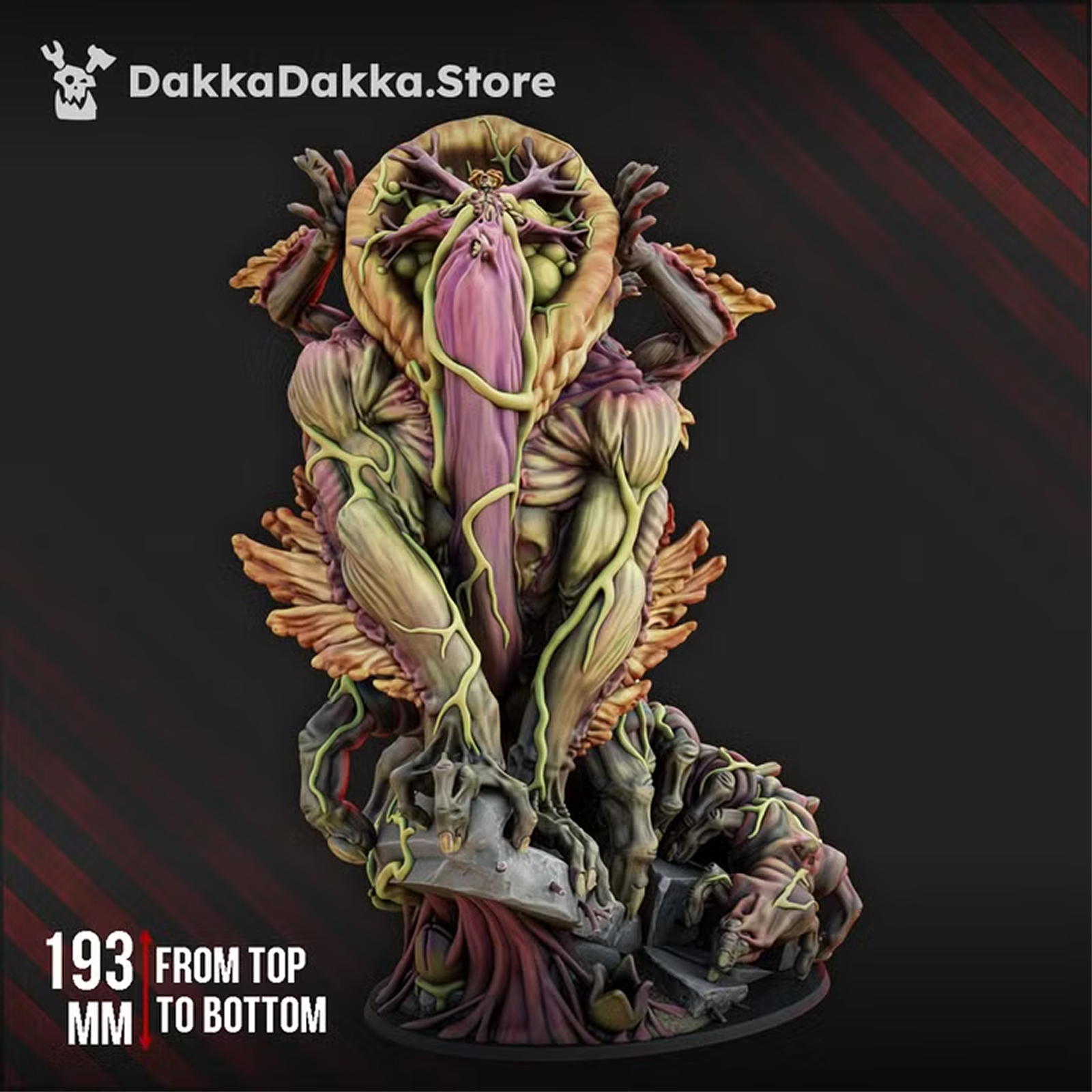
Collectibles, monster units and other large non-standard models are an exception. It is often tricky to determine the eyeline with these – especially when there is no head to speak of. Example: Fungzilla.
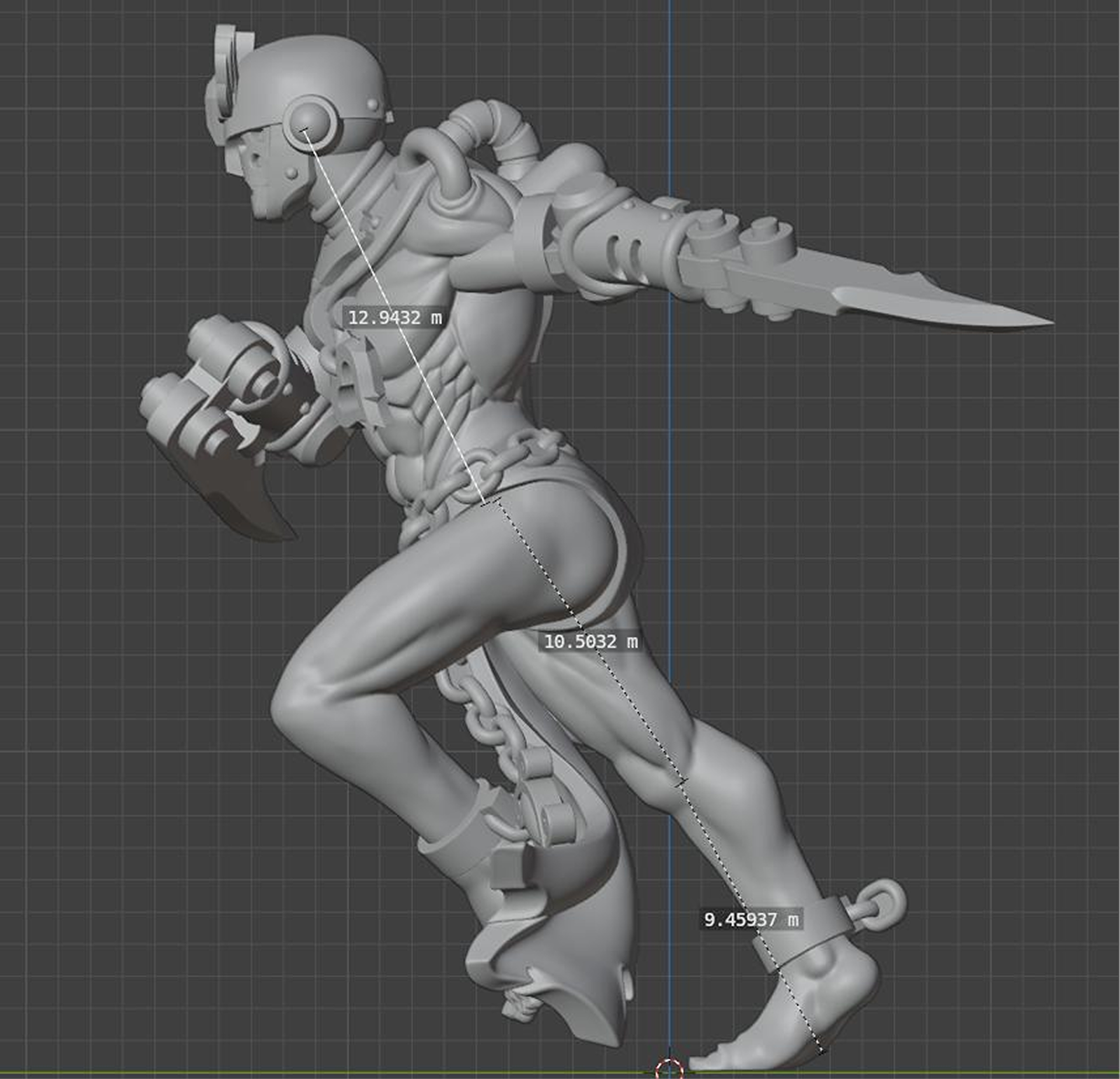
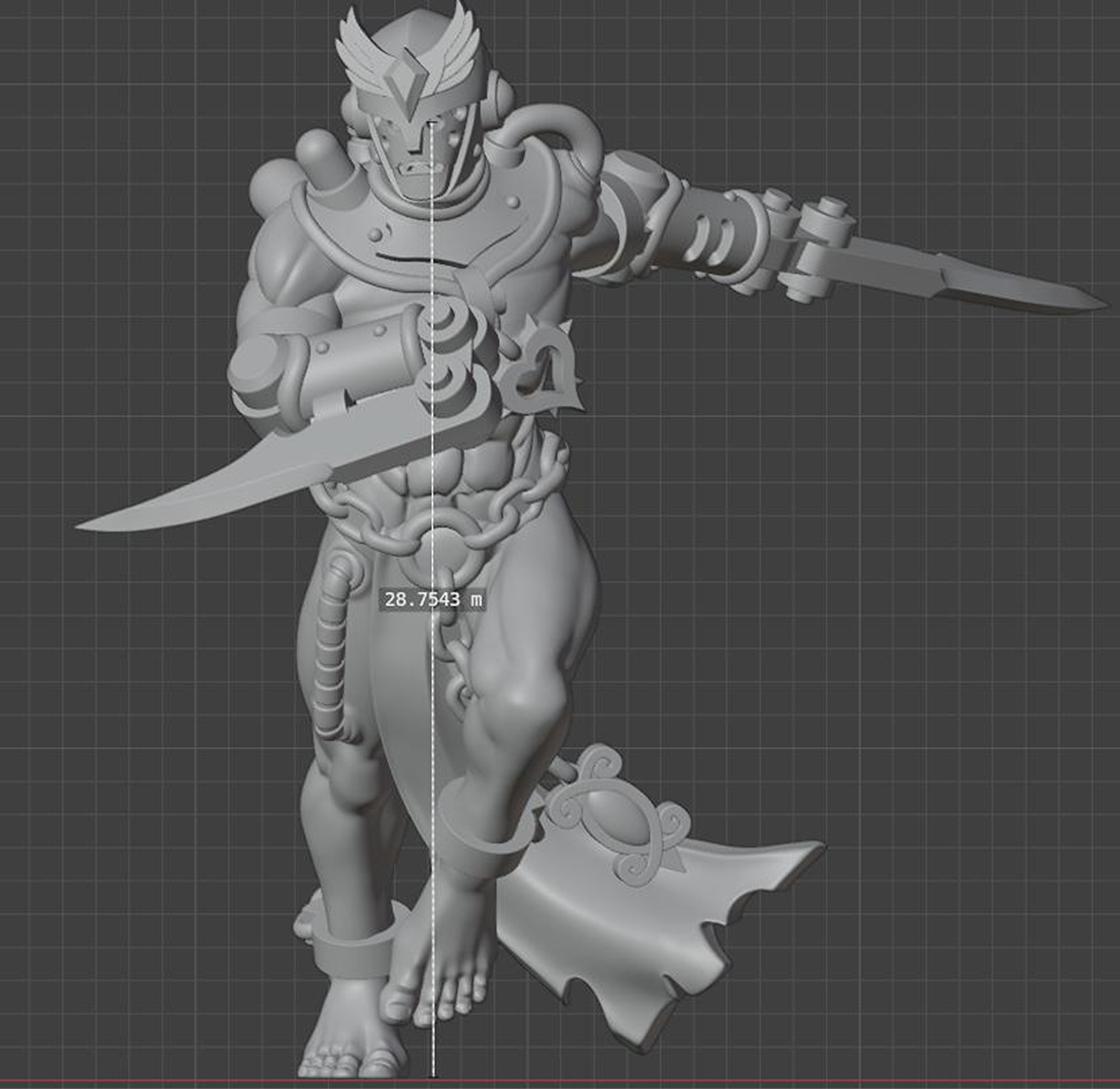
Of course, height is easier to measure if the model is standing straight. When it comes to the more action-y poses, our support engineers select several points on the body, check the distance between them and make sure that the sum is equal to the correct height (so-called “bone measurement”).
Scale to define proportions
Disclaimer:
This is less of an exact science and more of a spectrum. There is always at least a bit of size exaggeration as a lot of objects would be too tiny for tabletop otherwise. Occasionally, the term “semi-heroic” also pops up with creators whose styles land somewhere in the middle, between these two:
True scale is typically used to describe miniatures whose proportions are closer to realistic; a sculpting approach that is a bit like taking an object and shrinking it.
Heroic scale refers to models whose proportions are deliberately altered: larger heads, thicker limbs and bulkier bodies. These changes are introduced to make the units easier to paint and tell apart.
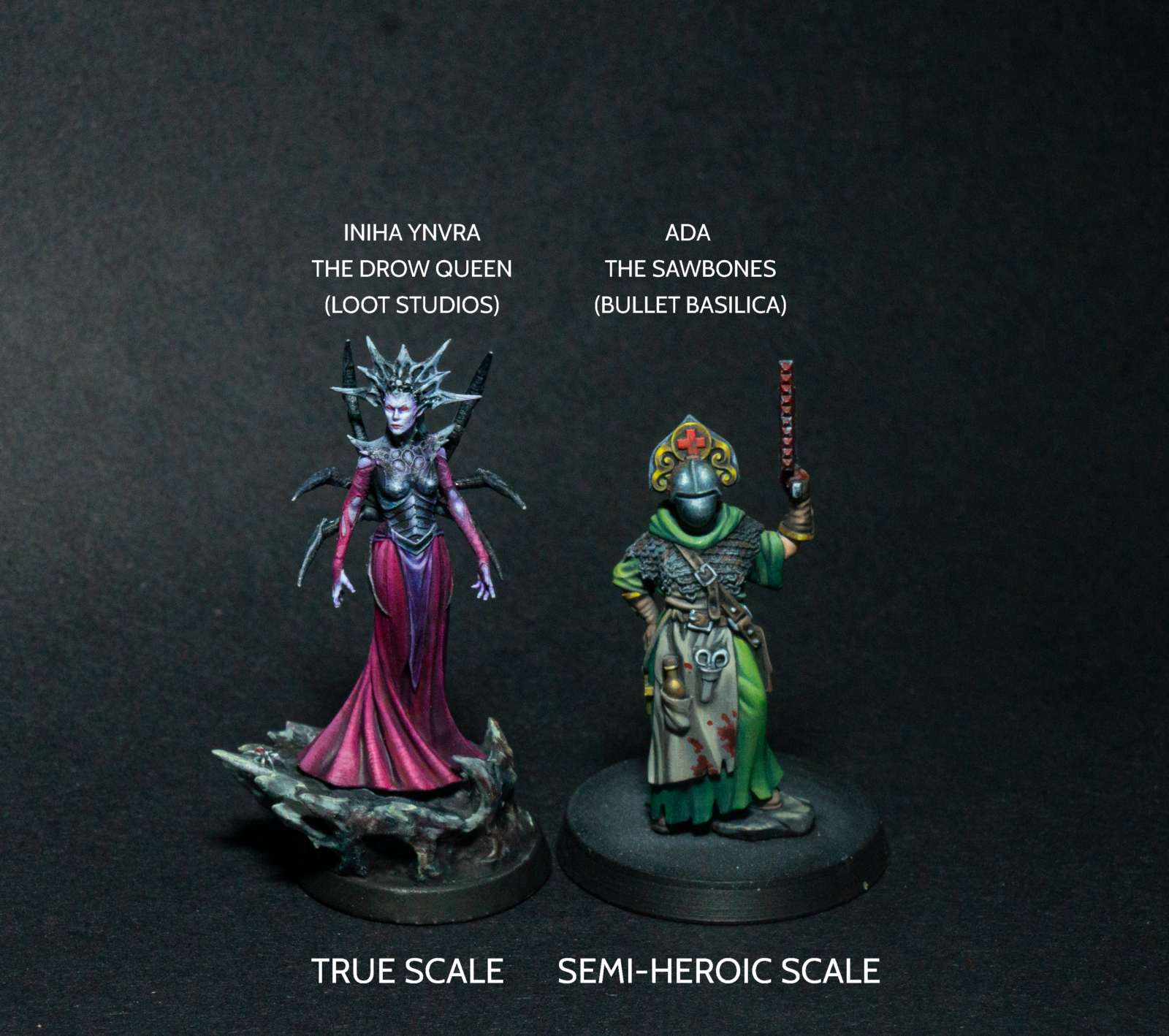
Next to a true scale model, a heroic scale one will look larger even if they are technically the same height. There may also be differences in proportions in the same scale category – slimmer women, beefier monsters etc.
With that out of the way, let’s look at Magnagothica: Maleghast and the way we went about tackling the scaling challenge.
What made it a challenge in the first place?
First, there were no scaling references; we were making the first official miniature line for the game. Second, “average infantry unit” is a vague term in a setting that has burning skeleton wheels, blobs of slime, ghosts and giant carnivorous birds. Third, Magnagothica: Maleghast has a distinct visual style that we were seeking to preserve, and -a lot- of body types. The team decided to do the following:
- Define several guiding principles (height brackets for unit categories, keeping necromancers slightly taller than human-like units on average to make them easier to find on the battlefield).
- Pester Tom Bloom about size relations.
- Send out demo kits and make several iterations.
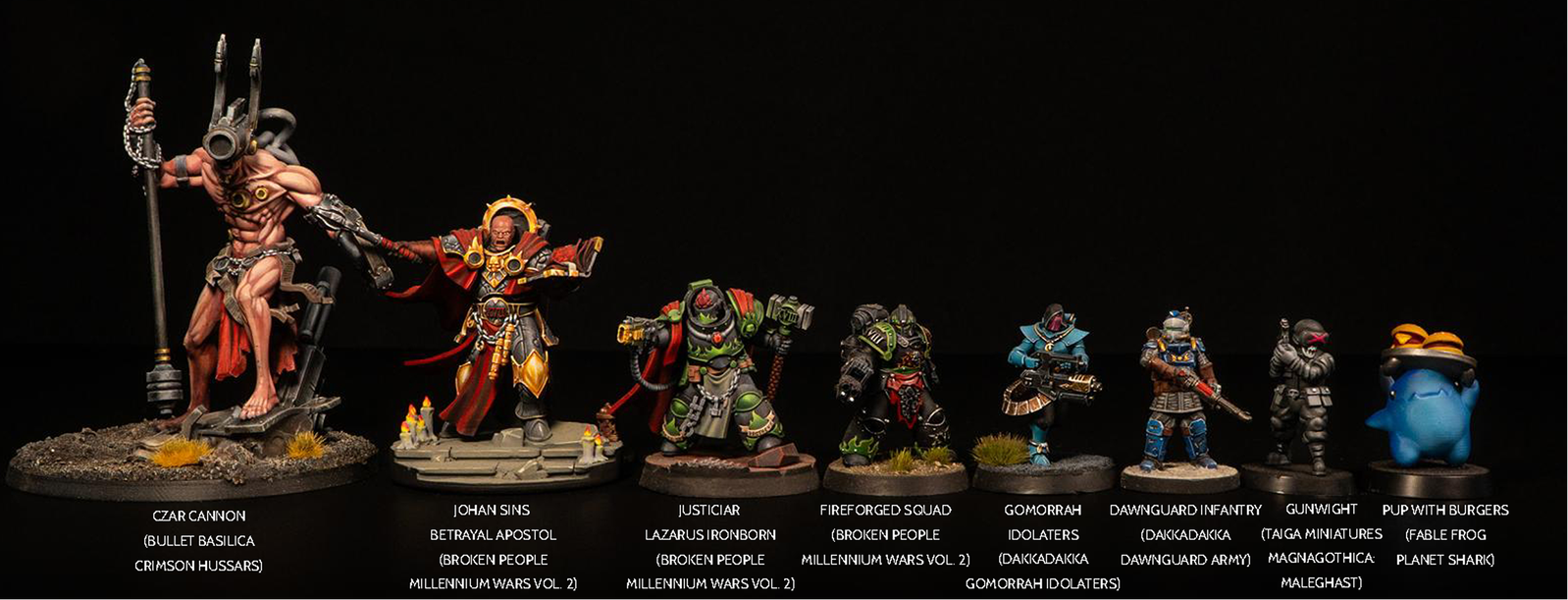
So that brings us here. Roughly speaking, the game’s miniatures are 32mm, heroic scale, but the full roster with its height and build variations looks like this:
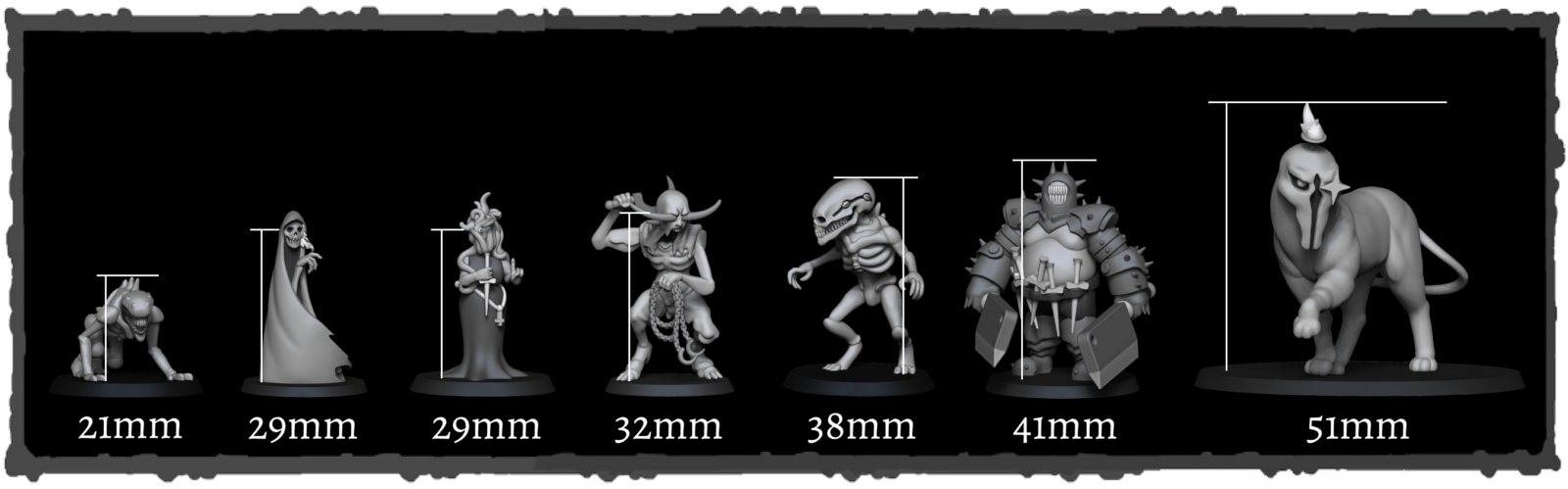
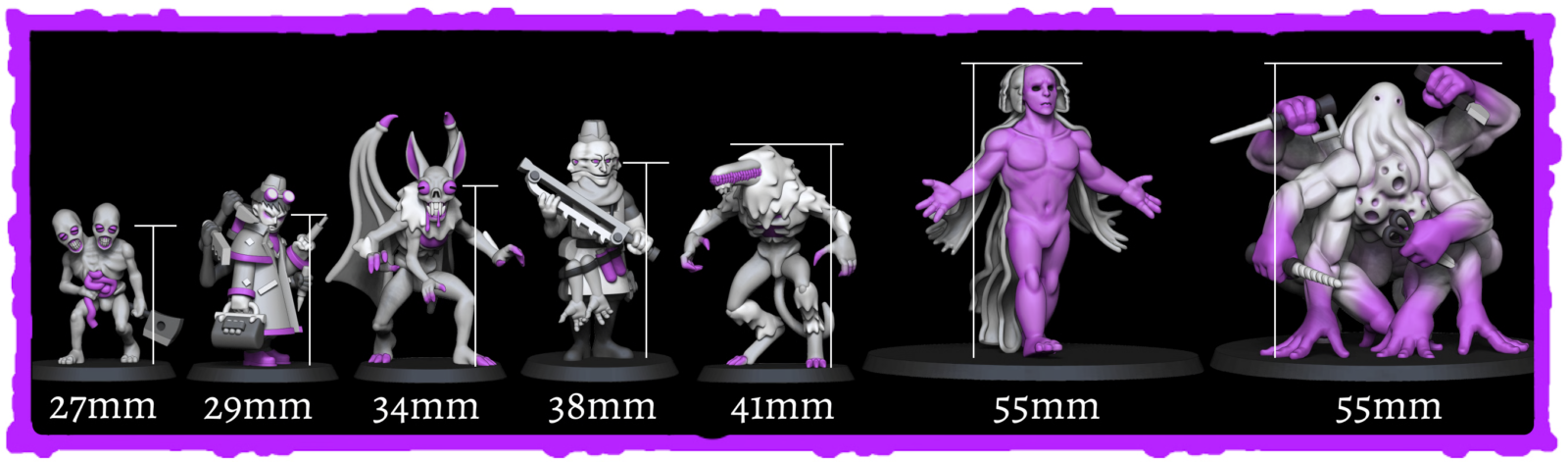
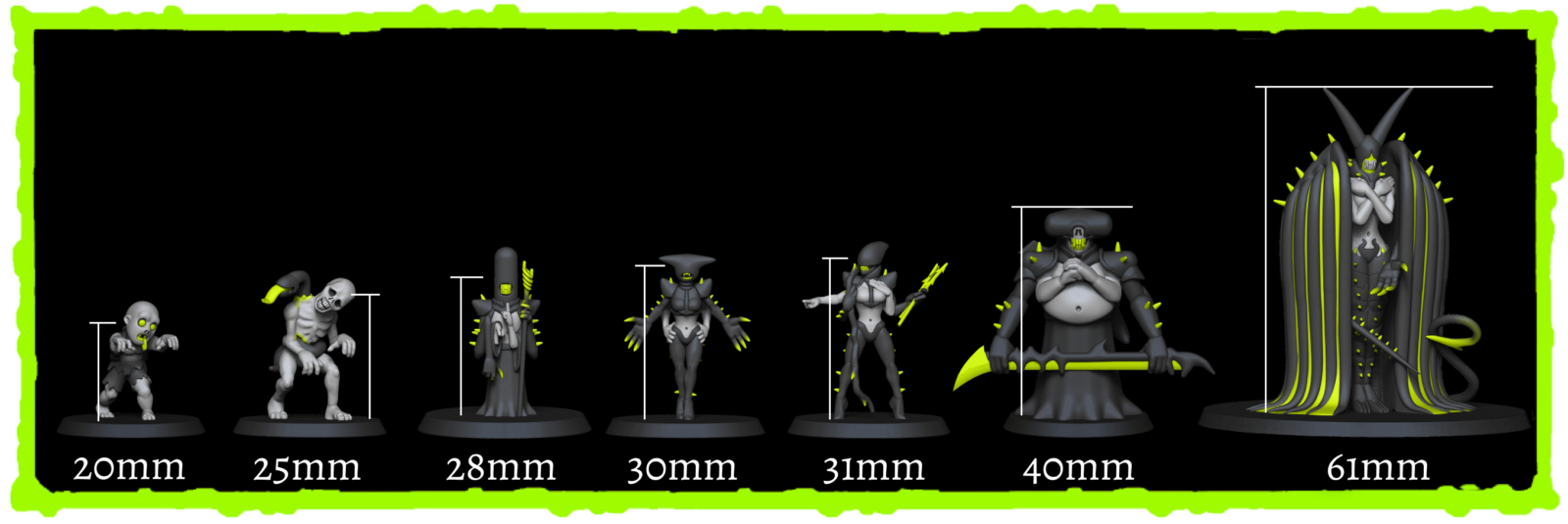
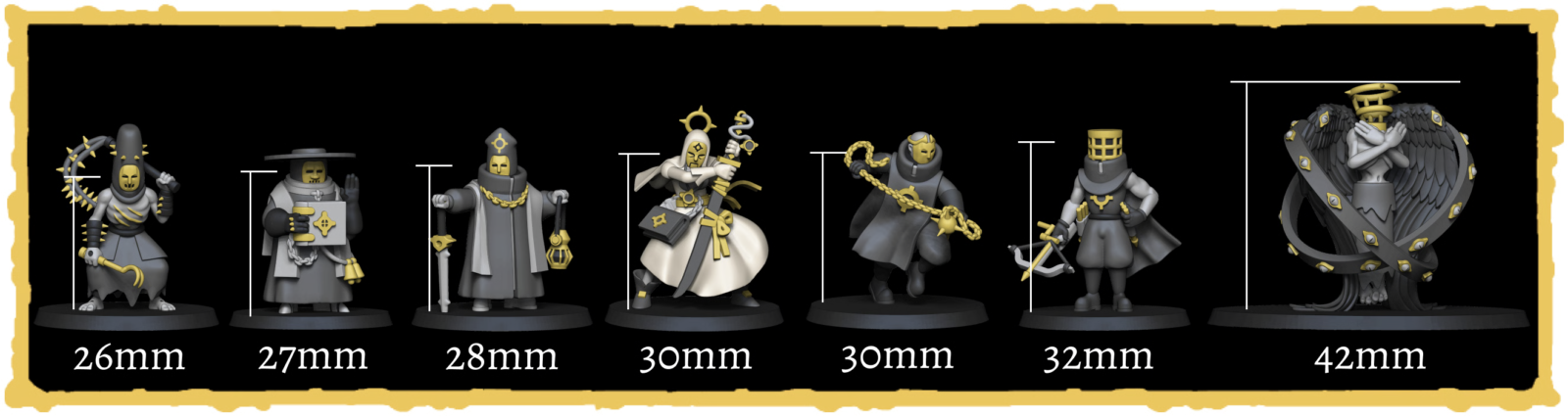
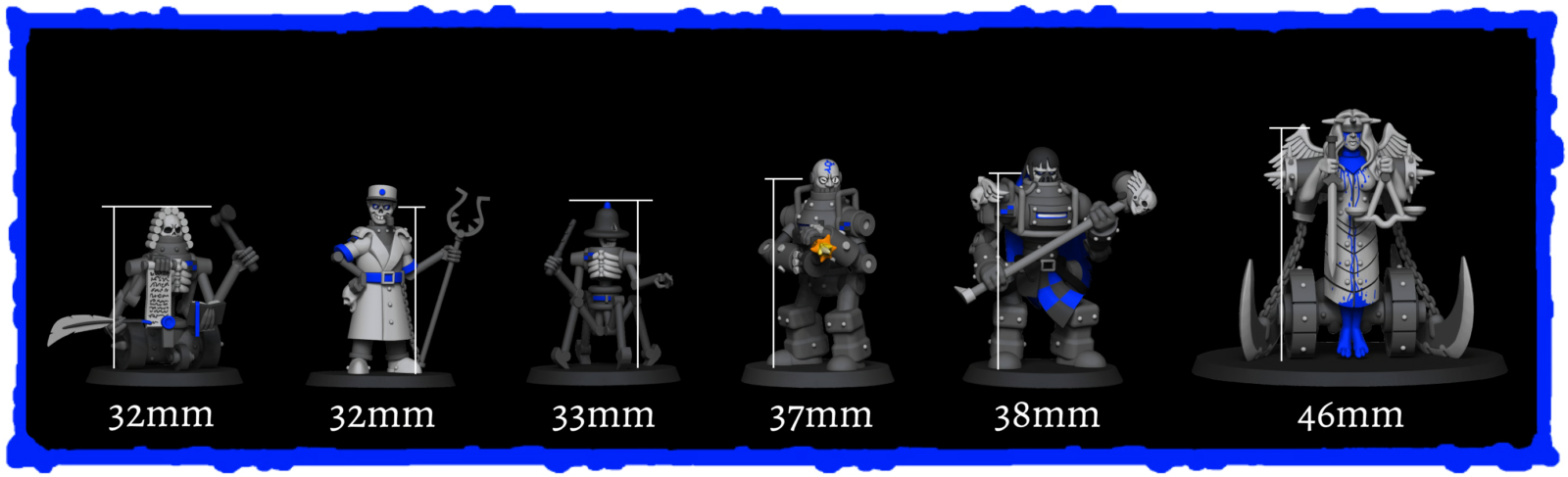
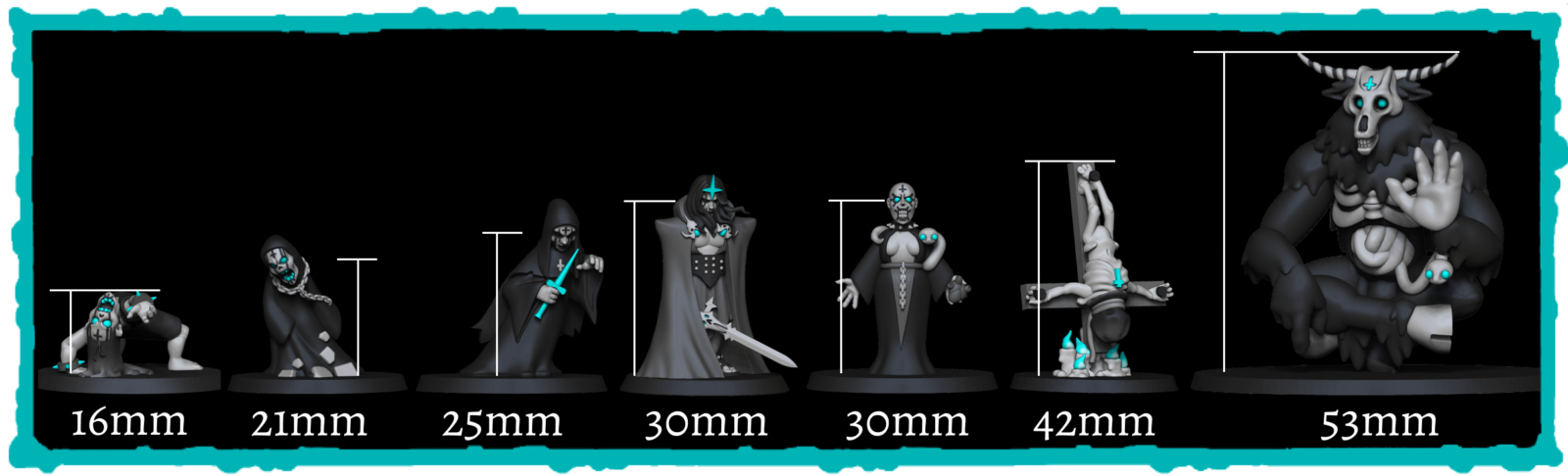
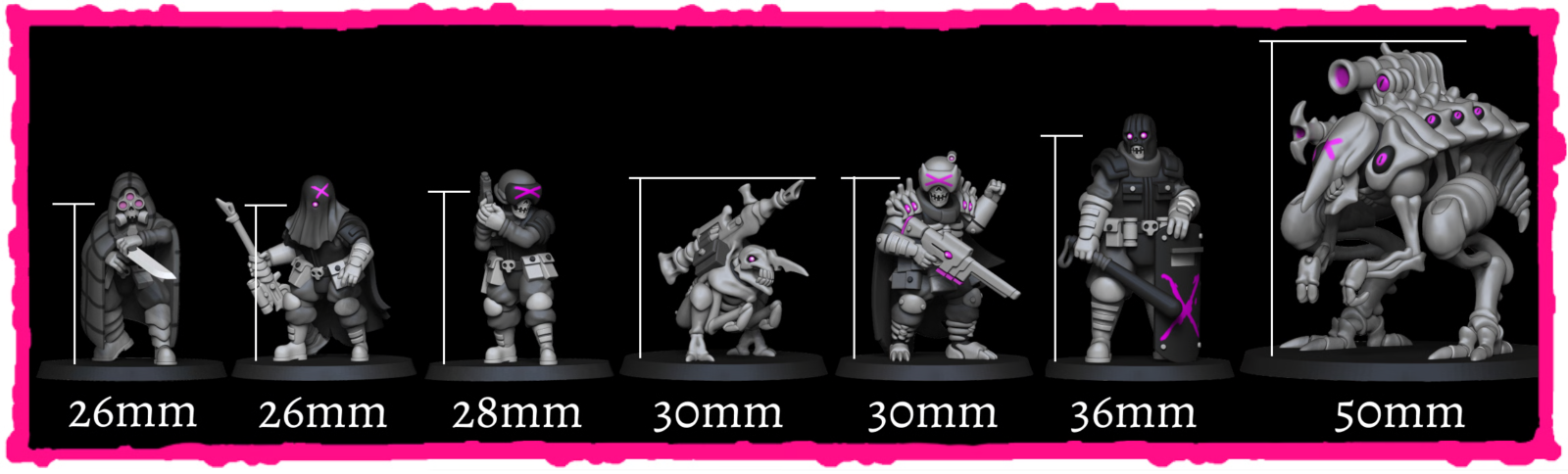
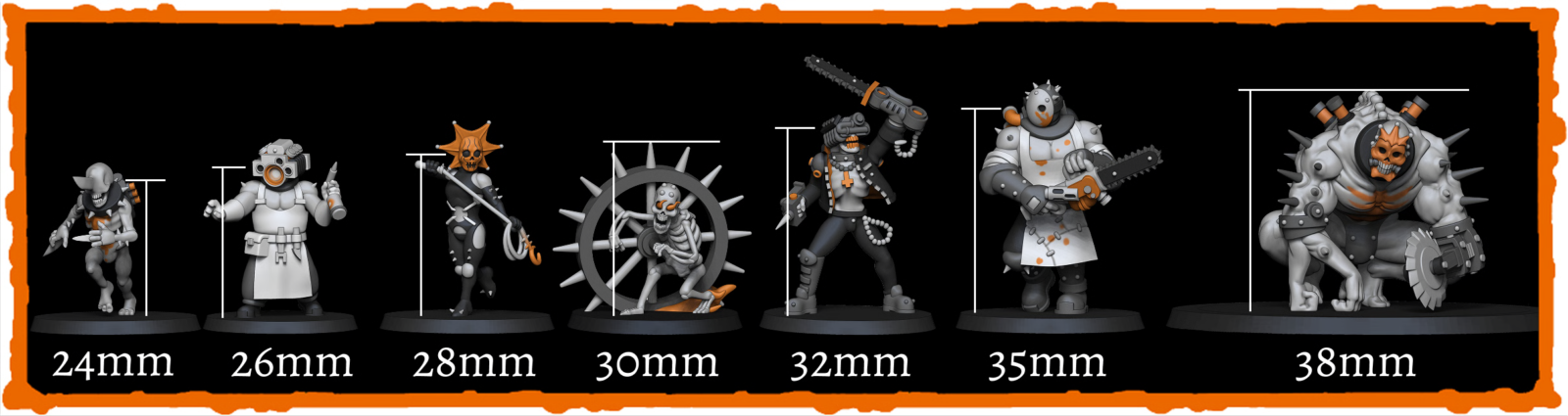
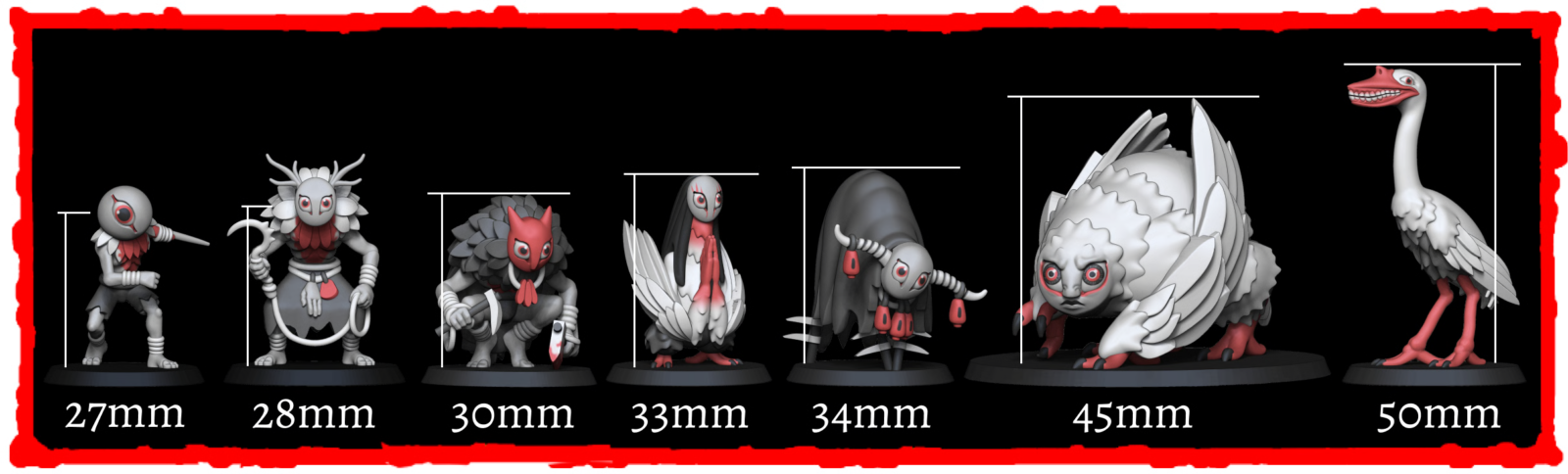
What do you think? Let us know here on Discord and and make sure to brag showcase your Black Mass once you have it printed and painted!